
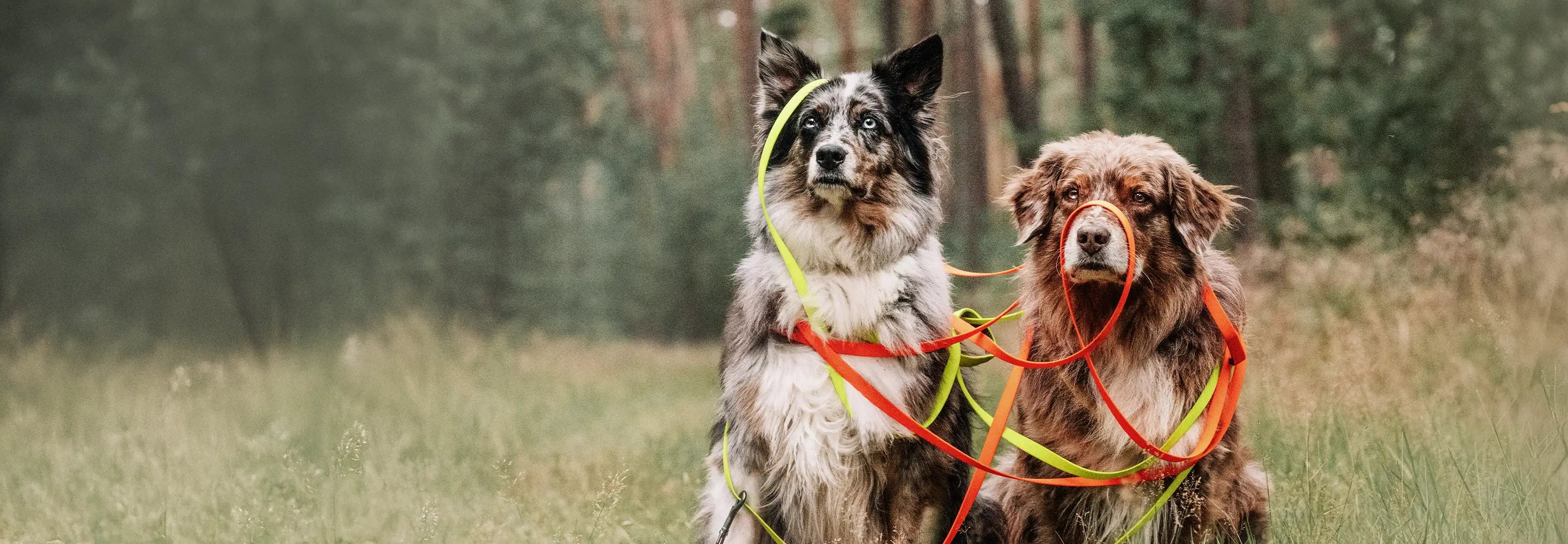






Finally spring - yippee! Or for some people: Oh no! Shedding time. But how can you make shedding more bearable for both dog and owner? Here we provide you with royal information, tips and tricks for the fur change period.
Why does a dog shed its coat?
Depending on the breed and age, almost every dog goes through a coat change twice a year, which can last around 3-8 weeks. In autumn the dense winter fur comes and now in spring the light summer fur.
While with some breeds you just find a little more flying fur, with other breeds you can make a second dog from the tufts of fur.
But why is the change of fur to summer fur always a little more “exhausting”?
Dogs' winter fur is simply much denser and has significantly more undercoat than their summer fur. To put it simply: the more undercoat and the denser the fur, the hairier the matter becomes when changing fur.
And how does the dog's body know that it's time for a coat change?
Various factors play a role here: temperature, longer days but also breed and age have an enormous influence on coat change. So there is no internal clock, but rather an interaction of various influences by which the dog's body recognizes when it is time to shed its coat again.
How can I support my dog when shedding her coat?
In summary, you can support your dog in the following three points during shedding.
- Nutrition
- Brushing & combing
- Puppy Tips
We'll tell you how best to do this:
Help through nutrition
Brushing, brushing and more brushing
In addition to nutrition also supports thorough, daily brushing the dog and also yourself if you don't want to vacuum several times a day.
Depending on the breed and the length of the fur, brushing or combing is not only an option, but also an essential obligation, because knots or tangles in the fur are a little torture for everyone involved.
Most products are divided according to coat type, strength level and sometimes also by breed. The range for grooming is large and includes a wide variety of types of brushes (e.g. soft brushes), combs, furminators and curries (e.g. silicone curry combs).
So it's best to find out in advance what is suitable for your pet and try out what works best for you.
Special tip for puppies
Don’t forget: grooming is the be-all and end-all
Grooming doesn't just mean having beautiful fur or just paying attention to it when shedding. It also stimulates blood circulation in the skin and is always a little health check on your part! Skin diseases, injuries or even parasites can be detected early.
We wish you a lot of patience and strong nerves during the coat change so that it gets through quickly! Do you want more tips on owning dogs? Then take a look at ours Paw Tips - have fun browsing!
Your pack king team

