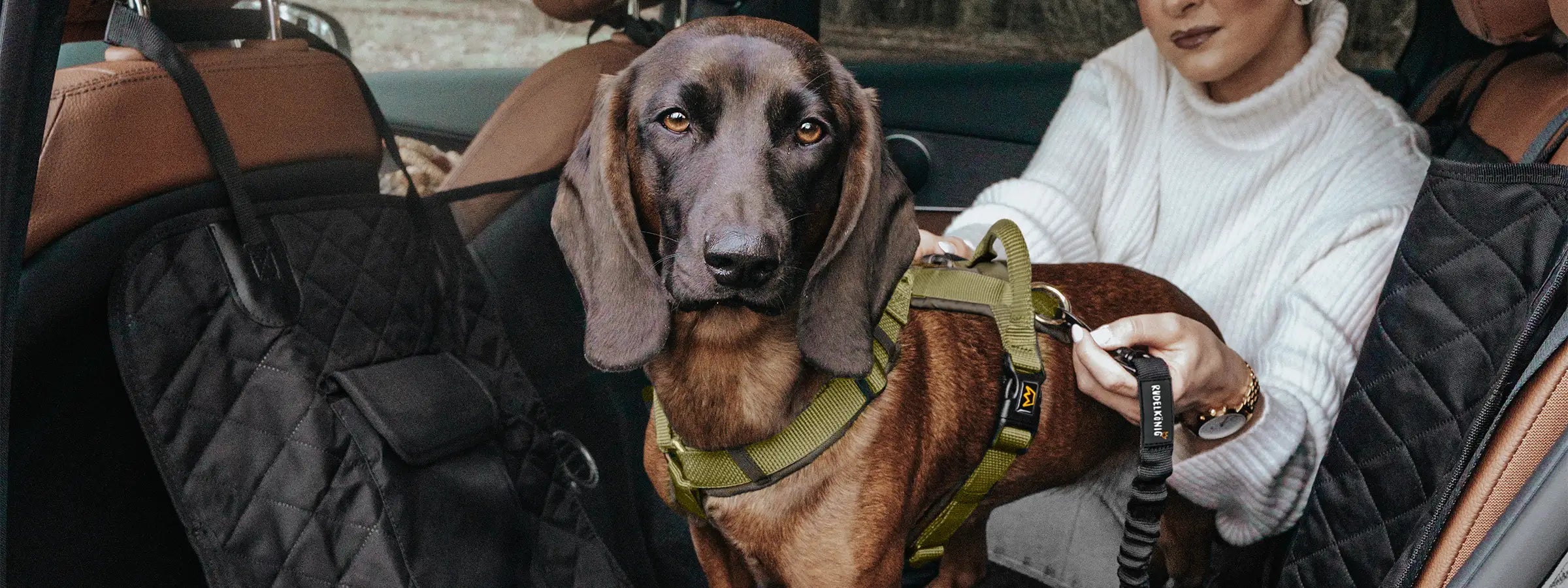
Das beste Hundegeschirr für deinen Vierbeiner von Rudelkönig
Ein Hundegeschirr bietet deinem Hund mehr Komfort und Sicherheit als ein Halsband, indem es den Druck gleichmäßig verteilt und Verletzungen vorbeugt. Bist du auf der Suche nach dem besten Hundegeschirr für deinen Vierbeiner? In diesem Artikel stellen wir verschiedene Arten von Hundegeschirren vor und erklären, worauf du bei der Wahl achten solltest.
Das Wichtigste auf einen Blick
- Ein Hundegeschirr verbessert das Wohlbefinden und die Sicherheit des Hundes, indem es den Druck gleichmäßig verteilt und Verletzungen des Halsbereichs vermeidet.
- Es gibt verschiedene Arten von Hundegeschirren (z.B. H-Geschirr, Y-Geschirr, Norwegergeschirr), die jeweils besondere Vorzüge für verschiedene Hunderassen und -größen bieten.
- Wichtige Auswahlkriterien für ein Hundegeschirr sind die Passform, das Material, die Verarbeitung sowie die Polsterung und der Komfort, um Bewegungseinschränkungen und Hautreizungen zu vermeiden.
Warum ein Hundegeschirr?
Ein Hundegeschirr dient dem Wohlbefinden des Tieres, ermöglicht eine bessere Kontrolle und bietet Halt in Notsituationen. Im Gegensatz zu einem Halsband verteilt ein Geschirr den Druck gleichmäßig über den Körper des Hundes, wodurch das Risiko von Verletzungen erheblich reduziert wird. Besonders für aktive Hunde und solche mit Halsproblemen ist ein Geschirr die sicherere Wahl und nicht das Halsband.
Beim Zug an der Leine wird der Druck durch ein Hundegeschirr gleichmäßig über den Körper verteilt, was Verletzungen der Luftröhre und der Halswirbelsäule verhindert. Ein Halsband hingegen kann bei starkem Zug zu ernsthaften gesundheitlichen Problemen führen, wie Verletzungen der Luftröhre und der Halswirbelsäule. Dies ist besonders wichtig bei Welpen, deren Halsregion noch sehr empfindlich ist.
Ein Hundegeschirr ist eine der wichtigsten Anschaffungen für eine gute Beziehung zwischen Mensch und Hund. Es bietet nicht nur Sicherheit und Komfort, sondern ermöglicht auch eine stressfreie und angenehme Kontrolle des Hundes. No-Pull Hundegeschirre sind besonders vorteilhaft für Welpen, da sie die Zugkraft gleichmäßig verteilen und somit ideal für Hunde sind, die an der Leine ziehen.
Die verschiedenen Arten von Hundegeschirren
Es gibt eine Vielzahl von Hundegeschirren, die jeweils unterschiedliche Vorteile bieten. Zu den bekanntesten Varianten zählen:
- das H-Geschirr
- das Y-Geschirr
- das Norwegergeschirr
- das Step-In Geschirr
- Brustgeschirr
Jede dieser Varianten hat ihre eigenen Besonderheiten und ist für verschiedene Hunderassen und -größen geeignet.
Das H bietet eine hohe Anpassungsfähigkeit in der Größe und kann mit wachsenden Hunden mitwachsen. Das Y-Geschirr zeichnet sich durch seine Y-förmige Konstruktion im Brustbereich aus und bietet eine enge Passform.
Das Norwegergeschirr ist einfach zu handhaben und besonders für Hunde mit tiefem Brustkorb geeignet. Das Step-In ist ideal für ängstliche Hunde, da es einfach anzulegen ist.
H-Geschirr
Das H ist ein spezielles Hundegeschirr, das eine H-Form hat und rund um den Brust- und Bauchbereich des Hundes verläuft. Diese Bauweise sorgt für eine gleichmäßige Druckverteilung auf den Körper des Hundes und verhindert Verletzungen im Halsbereich. Besonders aktive Hunde, die viel Bewegung brauchen, profitieren von einem H, da es ihnen erlaubt, sich frei zu bewegen und gleichzeitig sicher und komfortabel bleibt.
Das H- eignet sich auch hervorragend für Hunde mit Halsproblemen, da es den Druck vom empfindlichen Halsbereich wegnimmt und auf den Brust- und Bauchbereich verteilt. Es bietet zudem eine hohe Anpassungsfähigkeit in der Größe, was besonders vorteilhaft ist, wenn der Hund noch wächst.
Y-Geschirr
Das Y-Geschirr hat eine Y-förmige Konstruktion im Brustbereich, die keine händisch verbindbaren Gurte benötigt und eine enge Passform bietet. Diese enge Passform sorgt dafür, dass das Risiko, dass der Hund beim Training aus dem Geschirr schlüpft, minimiert wird.
Ein weiterer Vorteil des Y ist, dass es keine bewegungseinschränkenden Elemente im Schulterbereich hat, was die Bewegungsfreiheit des Hundes deutlich erhöht. Dies macht es zu einer idealen Wahl für Hunde, die viel laufen und spielen, ohne dass ihre Bewegungen eingeschränkt werden.
Norwegergeschirr
Das Norwegergeschirr ist besonders einfach zu handhaben, da es über den Kopf des Hundes gezogen wird und mit einem Brustgurt gesichert wird. Diese einfache Handhabung macht es besonders beliebt bei Hundebesitzern, die ein leicht anzulegendes Geschirr bevorzugen.
Dieses Geschirr ist besonders geeignet für Hunde mit tiefem Brustkorb, da der Bruststeg waagrecht entlang der Brust verläuft und so eine optimale Passform bietet. Im Vergleich zu anderen Geschirren, wie dem Sattelgeschirr, zeichnet sich das Norwegergeschirr durch seine einfache und effektive Konstruktion aus.
Brustgeschirr
Ein Brustgeschirr für Hunde sorgt für gleichmäßige Druckverteilung und schont Hals- und Schulterpartie bei wilden Abenteuern. Es bietet oft einen höheren Tragekomfort als ein klassisches Halsband und eignet sich besonders für Hunde, die an der Leine ziehen oder empfindlich auf Druck am Hals reagieren. Moderne Brustgeschirre sind in verschiedenen Größen, Materialien und Designs erhältlich, damit jeder Vierbeiner die optimale Passform findet. Regelmäßiges Nachjustieren und eine passende Einstellung garantieren Sicherheit sowie Bewegungsfreiheit bei jedem Spaziergang. Brustgeschirre gibt es meistens in den Größen S, M, L, XL.
Step-In Geschirr
Das Step-In wird durch zwei Schlaufen über die Vorderbeine des Hundes angezogen, was es ideal für ängstliche Hunde macht. Diese Anlegeweise reduziert den Stress für Hunde, die ungern etwas über den Kopf gezogen bekommen.
Step-Ins eignen sich besonders für kleine hunde, da sie einfach anzulegen sind und eine gute Passform bieten. Sie sind in verschiedenen Größen und Farben erhältlich, sodass für jede Hunderasse und jeden Geschmack das passende Geschirr gefunden werden kann.
Auswahlkriterien für das beste Hundegeschirr
Bei der Auswahl des besten Hundegeschirrs gibt es mehrere wichtige Kriterien zu beachten. Diese beinhalten die Passform und Größe, das Material und die Verarbeitung sowie die Polsterung und den Komfort. Ein gut sitzendes Hundegeschirr sollte sich individuell anpassen lassen, um eine optimale Passform zu gewährleisten bei euren Abenteuern.
Schlechte Passform kann die Bewegung des Hundes einschränken oder sogar gefährlich sein. Daher ist es wichtig, auf Qualität, Art der Befestigung und den Tragekomfort zu achten. Die Funktionalität, Passform, Material und Polsterung sind die wichtigsten Merkmale, die bei der Wahl eines Hundegeschirrs berücksichtigt werden sollten.
Passform und Größe
Die passgenaue Größe ist entscheidend, um die Funktionalität des Geschirrs zu maximieren. Um die optimale Größe für ein Hundegeschirr zu bestimmen, sollten folgende Faktoren berücksichtigt werden:
- Größentabellen (xs, s, m, l, xl)
- Brustumfang
- Rückenlänge
- Schulterhöhe
- Taillenumfang
- Hundegröße
- Gewicht des Hundes
Beim Kauf sollte darauf geachtet werden, dass das Geschirr im Achselbereich nicht zu eng oder nah sitzt, um Hautscheuern zu vermeiden. Ein gut sitzendes Geschirr sollte nicht hin und her rutschen oder zu eng anliegen.
Die Bänder des Geschirrs sollten nicht zu schmal sein, um ein Einschnüren des Fells und der Haut zu vermeiden.
Material und Verarbeitung
Hundegeschirre sollten aus robusten Materialien bestehen, um den täglichen Belastungen deines Liebling standzuhalten.
Bei der Verarbeitung solltest du auf folgende Punkte achten:
- doppelt genähte Naht
- stabile Verschlüsse
- robuste Materialien
- sorgfältige Verarbeitung
Diese Aspekte sind entscheidend für die Langlebigkeit und den Komfort von Hundegeschirren.
Polsterung und Komfort
Polsterung ist wichtig, um Druckstellen zu vermeiden und den Komfort des Hundes zu erhöhen. Ein ergonomisches Geschirr fördert die Bewegungsfreiheit und verringert das Verletzungsrisiko.
Welpengeschirre: Spezielle Anforderungen für junge Hunde
Welpengeschirre gehören zur Grundausstattung für Hundewelpen und sind wichtig, um gesundheitlichen Beeinträchtigungen durch Ziehen an der Leine vorzubeugen. Diese Geschirre schützen den empfindlichen Hals und die Wirbelsäule des Hundes beim Leinentraining, besonders wichtig für Welpen, die dazu neigen, bei Ablenkungen plötzlich zu rennen.
Für Welpen sollte das Geschirr verstellbar und mitwachsend sein, um eine optimale Anpassung zu gewährleisten. Die Gurte des Welpengeschirrs sollten an den Auflagestellen gut gepolstert sein, um Druckstellen zu vermeiden.
Häufige Fehler beim Kauf eines Hundegeschirrs
Beim Kauf eines Hundegeschirrs werden häufig Fehler gemacht, die langfristige gesundheitliche Probleme für den Hund verursachen können. Hier sind einige häufige Fehler, die vermieden werden sollten:
- Auswahl eines Geschirrs, das nicht zur Größe und Rasse des Hundes passt.
- Verwendung eines Geschirrs, das die Bewegungsfreiheit des Hundes einschränkt.
- Vernachlässigung der Materialien, die Hautreizungen verursachen können.
- Fehlende Anpassungsmöglichkeiten, die eine optimale Passform gewährleisten.
- Ignorieren der Empfehlungen von Tierärzten oder Fachleuten.
Diese Fehler können zu Muskel- und Gelenkproblemen führen.
Sattel- und Norwegergeschirre sollten vermieden werden, da sie die Schulterbewegungen des Hundes erheblich einschränken. Ein gut sitzendes Geschirr sollte so angepasst sein, dass eine Hand darunter passt, um sicherzustellen, dass es nicht zu eng sitzt.
Tipps zur Gewöhnung an das Hundegeschirr
Der Prozess des Angewöhnens an ein Geschirr sollte schrittweise erfolgen, um Stress zu minimieren. Eine langsame Steigerung der Tragedauer des Geschirrs ist wichtig, um Überforderung zu vermeiden.
Das Vertrauen des Hundes sollte zuerst aufgebaut werden, bevor mit dem Anziehen des Geschirrs begonnen wird. Positives Feedback wie Leckerlis kann helfen, das Geschirr zu einer angenehmen Erfahrung zu machen. Ablenkungstechniken, wie das Anbieten eines Spielzeugs während des Anziehens, können Stress reduzieren.
Pflege und Wartung von Hundegeschirren
Die Pflege des Hundegeschirrs ist wichtig, um dessen Haltbarkeit und Funktionalität zu gewährleisten. Die Pflege von Hundegeschirren variiert je nach Material; robuste Modelle aus Nylon können oft maschinengewaschen werden, während empfindlichere Geschirre Handwäsche erfordern.
Vor dem Waschen sollte das Geschirr auf Schäden überprüft und grobe Verschmutzungen entfernt werden. Für das maschinelle Waschen sollte das Geschirr in einen Wäschebeutel gelegt und ein mildes Waschmittel verwendet werden. Nach dem Waschen sollte das Geschirr an einem gut belüfteten Ort ohne direkte Sonneneinstrahlung trocknen, um Materialschäden zu vermeiden.
Zusammenfassung
Die Wahl des richtigen Hundegeschirrs ist entscheidend für das Wohlbefinden und die Sicherheit Ihres Hundes. Ein gut sitzendes Geschirr, das aus robusten Materialien besteht und gut verarbeitet ist, kann das Verletzungsrisiko minimieren und den Komfort Ihres Hundes maximieren.
Die vorgestellten Top-Empfehlungen für das Jahr 2025 in allen möglichen Farben bieten eine hervorragende Kombination aus Qualität, Komfort und Funktionalität. Ob für Welpen, kleine Hunde oder ausgewachsene Hunde, für den Alltag oder spezielle Aktivitäten – das richtige Geschirr macht den Unterschied. Gehe mit deinem Vierbeiner auf sichere und bequeme Spaziergänge und genieße die gemeinsame Zeit.
Häufig gestellte Fragen
Warum ist ein Hundegeschirr besser als ein Halsband?
Ein Hundegeschirr ist besser als ein Halsband, da es den Druck gleichmäßig über den Körper des Hundes verteilt und somit Verletzungen im Halsbereich verhindert. Dies sorgt für mehr Sicherheit und Komfort während des Spaziergangs.
Welches Hundegeschirr ist am besten für Welpen geeignet?
Für Welpen sind verstellbare und gut gepolsterte Geschirre, wie das Hunter Hilo Comfort und das Tripoli Welpengeschirr, am besten geeignet. Diese sorgen für Komfort und Anpassungsfähigkeit während des Wachstums des Hundes.
Wie finde ich die richtige Größe für das Hundegeschirr?
Um die richtige Größe für das Hundegeschirr zu finden, sollten Sie die Größentabellen nutzen und die Maße Ihres Hundes (Brustumfang, Rückenlänge, Schulterhöhe, Taillenumfang und Gewicht) genau erfassen. Dies gewährleistet eine optimale Passform.
Was sind die häufigsten Fehler beim Kauf eines Hundegeschirrs?
Die häufigsten Fehler beim Kauf eines Hundegeschirrs sind die Auswahl von Geschirren, die die Bewegungsfreiheit des Hundes einschränken, sowie das Anlegen von zu engen Geschirren. Diese Aspekte sollten unbedingt beachtet werden, um das Wohlbefinden des Hundes zu gewährleisten.
Wie gewöhne ich meinen Hund am besten an ein Geschirr?
Gewöhnen Sie Ihren Hund schrittweise an das Geschirr, indem Sie Vertrauen aufbauen und positives Feedback wie Leckerlis einsetzen. Dies fördert eine positive Assoziation und erleichtert die Eingewöhnung.
Gassi gehen mit Rudelkönig – das bedeutet Qualität und Komfort für dich und deinen Vierbeiner! Unsere Leinen, egal ob Multifunktions-, Schlepp- oder die Führleine, bieten dir die Freiheit, die du brauchst, während sie deinem Hund die Sicherheit geben, die er verdient. Unsere robusten Halsbänder und Geschirre sind nicht nur funktional und bequem, sondern auch stylish – perfekt für jedes Hunde-Halter-Team! Jetzt zuschnappen!