



Introduction: The path to a well-coordinated human-dog team
There is hardly any relationship that is as direct, honest and intense as the one between humans and dogs. But for a fluffy four-legged friend to become a reliable partner in everyday life, it takes more than just love: the best dog training is the foundation for a respectful, safe and relaxed life together. Whether in traffic, in crowds or walking through the forest - a well-trained dog means freedom, trust and a real quality of life.
For many dog owners, the challenge begins when the dog arrives. Suddenly you are faced with questions: How do I teach my dog commands? How do I react to unwanted behavior? What rules does a dog need to feel safe and secure? This guide provides you with well-founded instructions for dog training - practical, realistic and trust-building. We'll show you how you can become a real human-dog team with empathy, clear rules and the right tools such as a food dummy, a dog whistle or a well-thought-out dog leash like our "Emma".
The basics of dog training
Dog training does not begin with the first “sit” command and does not end with “down”. It is based on mutual trust, clear communication and a consistent attitude. Dogs are creatures of habit - they love rituals, reliable routines and clear leadership. Giving your dog orientation creates security - that is the basis of any successful training.
Decisive decisions are already made in puppyhood. This is where the socialization phase begins, in which your dog has the most important experiences - with people, other animals and his environment. This phase shapes his behavior and behavior for his entire life. Structured and loving support during this time is therefore particularly important.
An often underestimated aspect is the relationship between humans and dogs as a mirror: dogs react very sensitively to our mood, body language and behavior. A nervous person transfers their restlessness to the dog. It is all the more important that you as a dog owner work on your inner attitude and treat your dog as a confident leader.
Clarity and consistency: Why rules are so important
Your dog needs rules that are understandable and consistent. What is permitted today should also apply tomorrow - and vice versa. Inconsistency leads to insecurity, which quickly manifests itself in undesirable behavior. A well-trained dog doesn't constantly test boundaries, but rather knows what is expected of him.
A simple example: If your dog constantly pulls on the leash when you go for a walk, it won't help to correct him once and then let him pull again. Instead, it requires a clear strategy, repetition and training for correct behavior.
It is helpful to always be aware that dogs are not people - even if they are often treated like family members. Their communication, their thinking, their needs are different. Anyone who deals with how dogs learn and what they need can train them more specifically. Dog trainers are valuable support here, especially when it comes to specific challenges.
Communication: Learning to understand – on both sides
Dogs' language is non-verbal and their environment influences them greatly. They speak with posture, looks, ears and tail position. If you observe your dog closely, you can recognize its needs and moods - and act accordingly. At the same time, dogs also learn to read our body language. Your posture, tone of voice and timing are crucial to how your dog perceives you.
A well-trained dog not only responds to commands, but also follows your behavior. This is the core of the relationship – not orders and commands, but trust and cooperation.
Dogs that feel safe are significantly less likely to engage in problematic behavior. Insecurity, on the other hand, can lead to barking, pulling on the leash, aggression or overprotective behavior. That's why safe, communicative interaction is the be-all and end-all in dog training.
Dog training as the key to successful coexistence
Good dog training is much more than practicing commands - it is a process that forms the basis for harmonious coexistence between humans and dogs. It's about relationship work: you strengthen your dog's trust in you, create orientation and security, and show him how to find his way in our complex world.
The decision to actively work on parenting is an investment in your future together. It doesn't matter whether your dog is young or old, lively or reserved - with the right training, every dog can learn to behave appropriately. What is particularly important is building routines and repeating learned behaviors in different situations.
Conflicts often arise from misunderstandings: a dog pulls on the leash because it cannot classify stimuli, barks at visitors because it lacks experience. This is where meaningful training comes in – it leads step by step to more calm, respect and togetherness.
Sit, down, stay: Important dog commands for everyday life
These commands form the backbone of dog training. They not only help control your dog, but promote his concentration and self-control.
-
Seat: A command to help your dog focus and find calm. It is the basis for many other exercises.
-
place: A good way to teach your dog to stay in one place for long periods of time.
-
Stay: Particularly important in dangerous situations – such as in traffic.
These commands can be learned playfully and effectively using food dummies and positive reinforcement. Patience is important: a command like “sit” often has to be practiced hundreds of times before it works reliably, even when distracted. Stay calm, friendly and consistent - and remember to praise your dog when he is successful. Even small steps are successes!
Tricks and mental workload
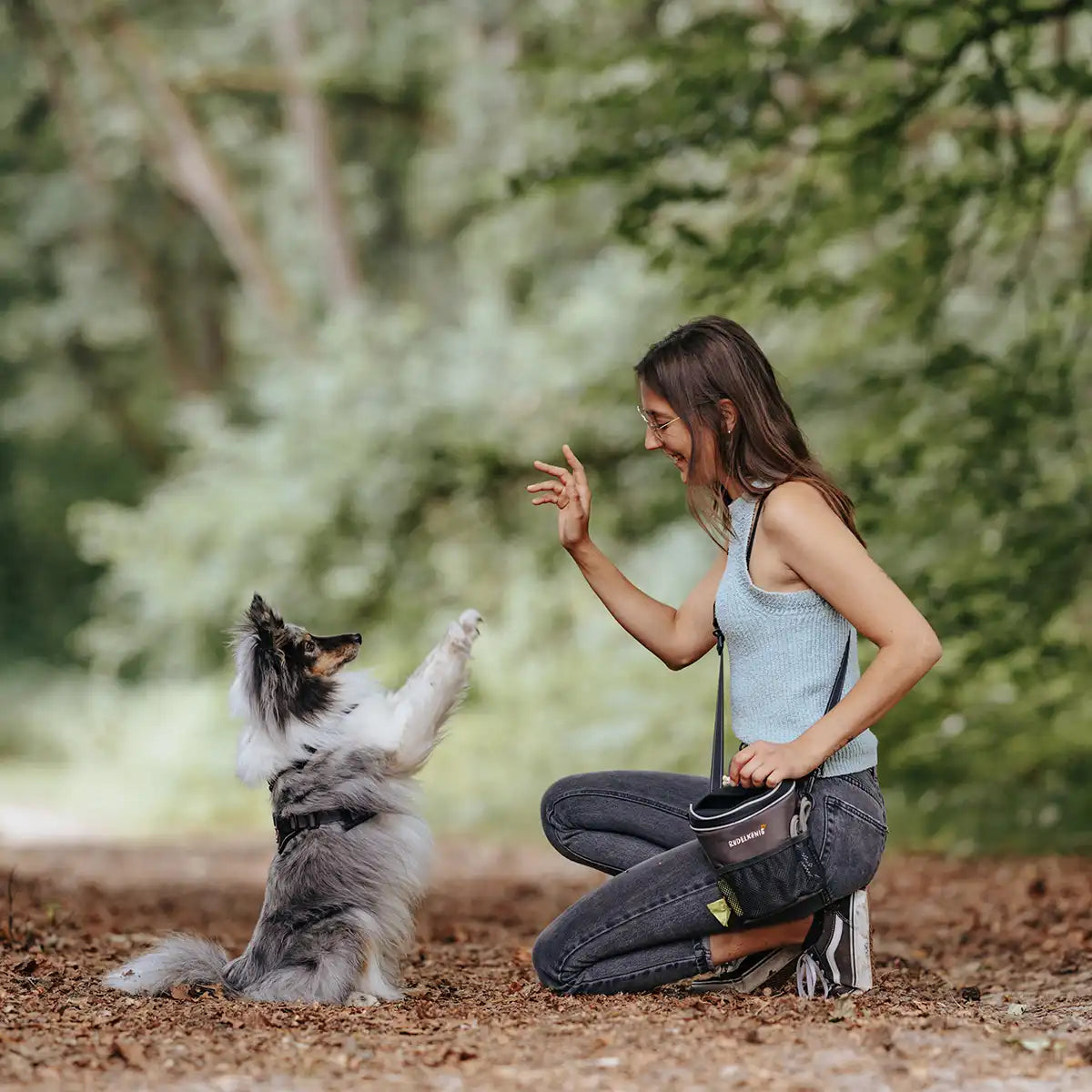
In addition to basic training, dogs enjoy mental challenges. Little tricks like “give a paw,” “turn,” or balancing treats promote concentration and strengthen your bond. Important: Stay patient, praise your dog even for small progress and make the training a shared experience.
Learning new tricks is not only entertaining, but also a great workout for your dog's brain. Older dogs in particular benefit from this because it keeps them mentally fit. Young dogs, on the other hand, learn through play to pay attention to you and work together with you.
Leash guidance: Relaxed on the move with the right equipment
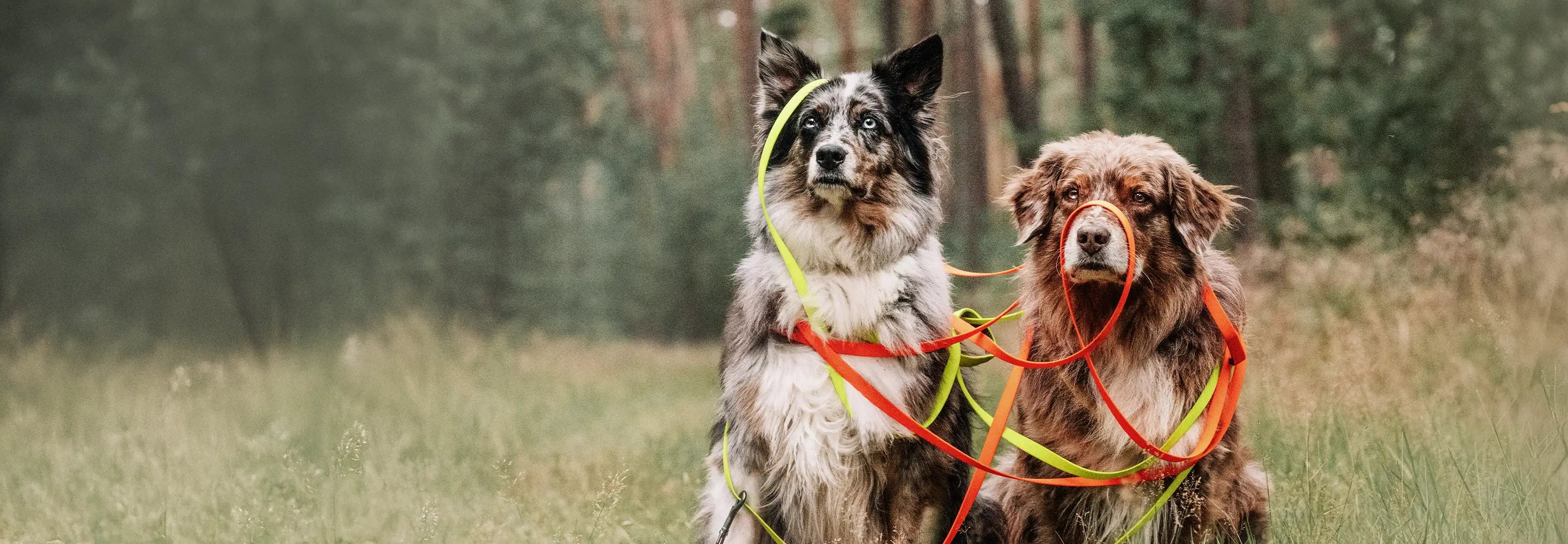
Good walking on a leash is essential for relaxed walks. Your dog should learn to walk loosely on a leash, to orientate himself on you and to remain attentive when changing direction. Our dog leash “Emma” is ideal for this: robust, comfortable to hold and tried and tested in practice. It supports you in achieving your training goals and turns every walk into a relationship-strengthening experience.
Don’t use the leash as a “steering tool,” but rather as a means of communication. When your dog stops, ask yourself: What does he see, hear or smell? Stay in touch with him, even when you are in your own thoughts. Especially when encountering dogs or in crowds, it is important that you maintain control without exerting pressure. The leash should not be a means of coercion, but rather a bridge between you, as conditioning teaches.
Mastering everyday situations: dog training in practice
The true art of dog training can be seen in everyday life. Whether it's a walk in the park, meeting other dogs or in a café - every situation can be a training opportunity. As the owner, it is up to you to give your dog orientation. This works best if you act with foresight, guide him and communicate on an equal footing.
Many undesirable behaviors arise not from defiance, but from insecurity or excessive demands. It is your job to react appropriately - with a calm voice, clear body language and, if necessary, a targeted correction. Correction does not mean punishment, but rather clear, understandable feedback: “This behavior is not desired – here is the alternative.”
This type of parenting work is a daily decision. It's about not just letting your dog function, but helping him develop into a reliable, relaxed companion. Every human-dog conflict can be an opportunity for development – for both of you. With patience, consistency and joy in learning at your side, you will grow little by little into a real team.
Avoiding mistakes: The most common stumbling blocks
-
Talking too much: Dogs don't understand long sentences - rely on clear, short commands.
-
Inconsistency: Don't keep changing the rules.
-
Wrong timing: Praise or correct at the right moment so your dog understands the connection.
-
Unclear body language: Your dog reads your attitude – be clear in your communication.
Use resources sensibly
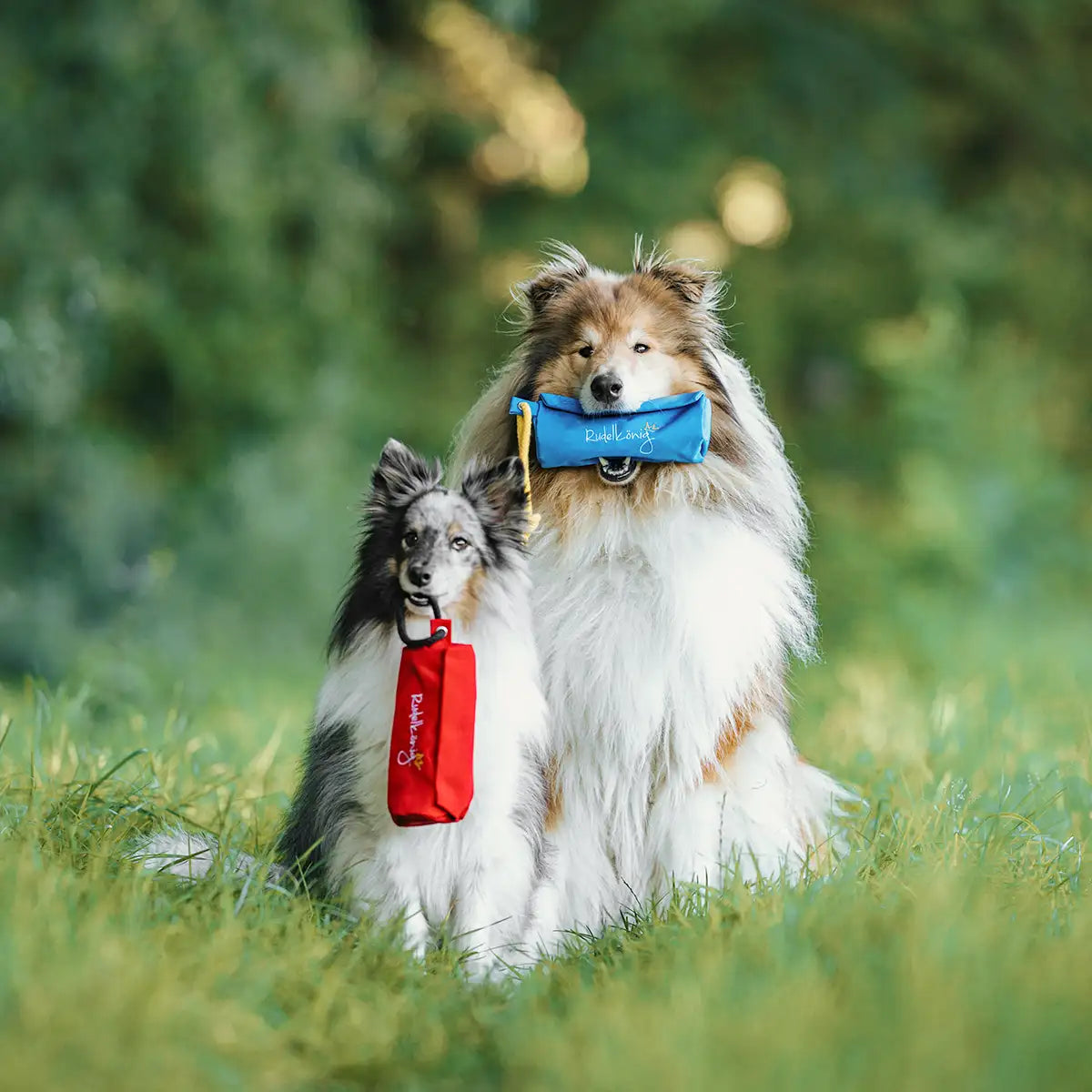
Food dummy
Promotes play instinct, motivation and attention. Perfect for retrieving and concentration exercises.
Dog whistle
Ideal for recall training as their tone is constant and can be heard even from a distance.
Dog leash Emma
High-quality workmanship, pleasant feel and functional design – your daily companion during training.
Master everyday situations confidently
From a walk in the city to meeting other dogs: every situation is a training ground. Use real experiences to consolidate what you have learned. Guide your dog through new environments, give him security in the presence of stimuli such as cyclists or loud noises, and observe his behavior. This is how you develop a deep understanding – and your dog grows alongside you.
Debunking Myths: What Dog Training Really Means
“A dog has to hear!” – Yes, but how? Outdated methods of pressure or punishment are a thing of the past. Modern dog training and contributions to it are based on scientific findings on behavioral biology and learning psychology. Positive conditioning, empathy and patience are the keys to success.
Even more about educational work: patience and knowledge for sustainable success
Training work is not just a one-time learning of commands, but a continuous process - especially if your dog has to master new tasks or relearn behavior. This requires repetition, patient guidance and sometimes regression. Every dog has its own story, its own temperament, its experiences - and as a dog owner you should respond to this individually.
The dog commands are built up gradually. First in a quiet environment, later with distraction. Use the principle of classical and operant conditioning, i.e. linking stimuli with actions and consequences. A “sit” on the street only becomes reliable if your dog has previously practiced it in the living room, garden and park.
Dog trainers as valuable support
A qualified dog trainer can help you better understand your dog's signals, avoid training mistakes, and take your training to the next level. Many dog trainers work with positive reinforcement and offer individual solutions - perfect for specific challenges or to deepen the bond.
When choosing, pay attention to experience, transparency and a modern training concept. Because trust is the most important thing, especially in dog training - both between you and your dog and between you and the trainer.
Dog training is teamwork – with a long-term effect
Every dog is unique. But with patience, knowledge, the right accessories and genuine interest, parenting becomes a journey together. When your dog learns to find his way in our society, you can lead him safely and relaxed through the world - whether at meetings, in traffic or on vacation.
At the same time, you also develop further - you become more mindful, clearer in your communication and learn to pay attention to non-verbal signals. This is exactly where the real magic of dog training lies: It doesn't just change the dog - it changes us as humans too.
Your next step
Start today. Observe your dog, find your rhythm, train with joy and use high-quality equipment. Because true dog training begins with the desire to grow together.
👉 Discover now: Food dummy, dog whistle & dog leash Emma