
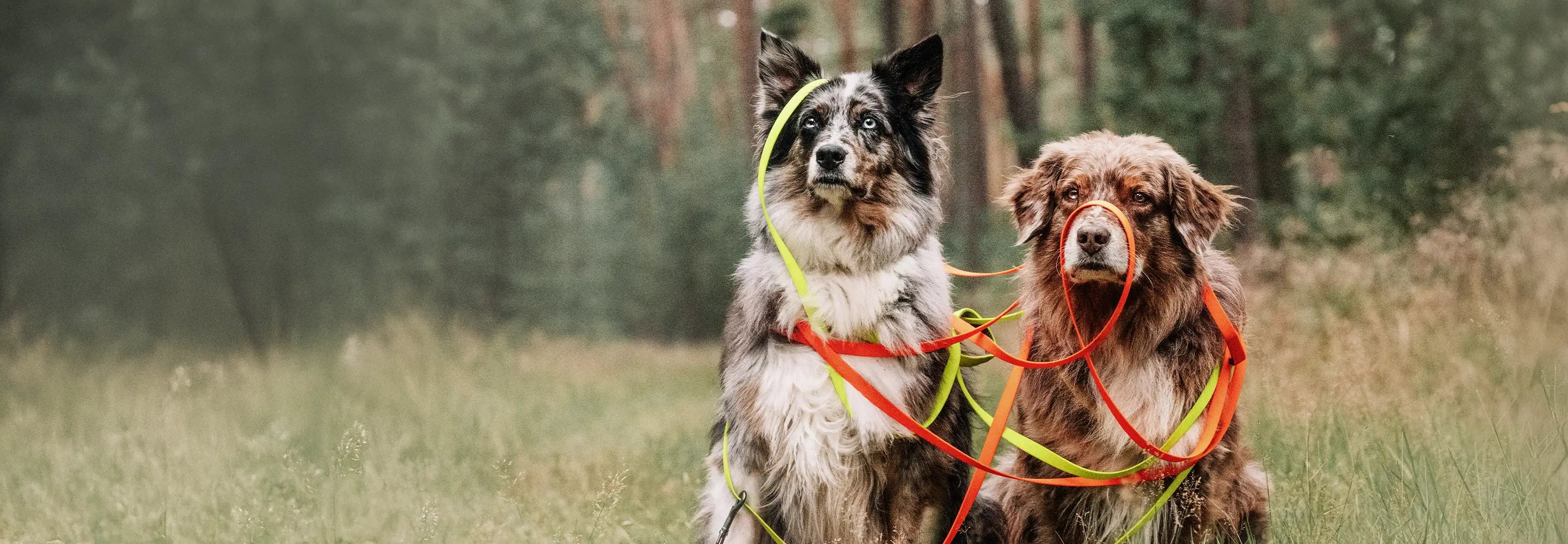











Introduction: Why our dogs are so special
Dogs are more than just pets – they are companions, protectors, friends and loyal family members. They have lived with us humans for thousands of years, sharing our everyday lives, our joys and our worries. This article offers you comprehensive information about dogs and highlights various aspects that are important for dog owners and those interested. But what actually makes dogs so special? What characteristics, abilities and characteristics distinguish them from other animals? And why is the domestic dog, scientifically Canis lupus familiaris, has remained one of man's closest allies to this day? In this guide we take you on an exciting journey through the world of dogs - from their origins as wolves to the special features that make them unique. You will learn everything about their biology, their sense of smell, their relationship to us humans, their role in our society and get practical tips on how to better understand what makes your dog so unique.
This article will cover various topics related to the special characteristics of dogs in order to provide you with a comprehensive overview and detailed information.
The roots: Dogs descend from wolves
Every dog, whether a tiny Chihuahua or a mighty Great Dane, has a common ancestor: the wolf, or more precisely the Canis lupus. The dog is descended from the wolf. The domestic dog developed from this wild animal species through breeding and domestication over thousands of years, Canis lupus familiaris. The wolf's homeland was originally in the northern hemisphere. The close bond between humans and dogs emerged when wolves began to approach human settlements. The animals that were more trusting, less shy and more adaptable survived better near humans. This relationship gave rise to the domestic dog, which, as a domesticated animal, acquired a special meaning for humans and still accompanies us faithfully to this day. This development is one of the oldest and most successful domestications ever.
There are dogs everywhere in the world
Whether in Asia, Europe, Africa or America – dogs live on every continent. They adapt to different habitats, from city apartments to mountain farms. Some breeds are true specialists: Huskies feel comfortable in eternal ice, while the Chow Chow from China once guarded temples. This diversity is evidence of their enormous adaptability. There are a large number of dog breeds worldwide that differ in size, coat, colors, weight and usage. Each of these breeds has its own distinctive features.
The Biology of the Dog: A Profile of Nature
Let's look at them Special features of dogs in more detail. Biologically speaking, dogs belong to the order of carnivores (Carnivora) and are typical representatives of mammals. As a mammal, the dog shares many characteristics with other mammals, such as the presence of fur and the birth of live young, but differs from other mammals such as whales or humans in certain characteristics, such as behavior or body structure. When looking at dog biology, it is important to include all relevant aspects in order to get a complete picture. Their body type is flexible: they can run, herd, hunt, guard or simply cuddle on the sofa. Their fur comes in countless colors, from classic brown to black and white to exotic colors. The color of the coat plays an important role in the appearance and differentiation of different dog breeds. The appearance of dogs is extremely diverse and ranges from small, delicate breeds to large, powerful animals. The dog is a real miracle of nature - from its powerful teeth to the fine olfactory cells in its nose.
The sense of smell: super nose on four paws
When talking about the special abilities of dogs, the sense of smell cannot be missing. With around 220 million olfactory cells, it far exceeds the human sense of smell. Their nose is so fine that they can detect explosives, diseases or lost people. Special herding and hunting dogs have been bred over centuries to perfect precisely these skills. A guide dog uses its sense of smell to detect and safely avoid obstacles. So it's no wonder that the dog as that best olfactory organ among domestic animals applies.

The human-dog relationship: a bond for life
The Human-dog relationship is unique. Dogs are social creatures that seek closeness. They recognize our mood, share joy and provide comfort. Studies show that eye contact with a dog releases oxytocin - the bonding hormone that also works on parents and children. A dog is not just an animal, it becomes a member of the family. Many people affectionately refer to their dog as a friend or companion. This close bond is particularly evident in family dogs, which are often used as “right-pawed dogs” – dogs, like humans, prefer one dominant paw.
Dog breeds: variety with special characteristics
Whether Great Dane, Labrador, Chow Chow or Poodle – the breed diversity is enormous. Each breed of dog has certain characteristics and its own name that uniquely identifies it. Each breed has special characteristics. Herding dogs like the Border Collie are extremely alert and eager to learn. Guard dogs like the German Shepherd protect the house and yard. Guide dogs or therapy dogs do great things in the social area. Some dogs are bred for their specific purpose: the Labrador retrieves game, the St. Bernard saves people in the snow. This diversity makes the world of dogs so colorful.
Husbandry and breeding: responsibility that connects
Breeding has shaped many of these peculiarities in dogs. For domestic dogs, the focus is on specific breeding goals such as a certain external appearance, a friendly nature and adaptation to life as a family dog. But with breeding comes responsibility. Good breeders ensure that health, temperament and characteristics are maintained. At the same time, the living space of many dogs is changing: once purely working animals, now mostly family members. The attitude should always be species-appropriate. A dog needs exercise, activity and social contact. Anyone who understands their dog quickly realizes how important a stable environment is.
Nutrition and Health: What Dogs Really Need
Nutrition plays a central role in the health and well-being of our dogs. As descendants of the wolf (Canis lupus), dogs have adapted their lifestyle to life as pets, but their biological needs have remained. Dogs are omnivores that can eat both meat and plant foods. A balanced diet rich in proteins, healthy fats, carbohydrates, vitamins and minerals supports the immune system and ensures an active, long life. Every dog is unique - age, activity level and possible intolerances should be taken into account when feeding. If you pay attention to the right diet, you lay the foundation for a healthy dog's life and can prevent many diseases. This keeps your dog fit and vital – a loyal companion at your side.
Life expectancy and age: Together through dog life
How long a dog lives depends on many factors: breed, size, health and lifestyle play a big role. Small dog breeds often live longer than large ones, but there are differences even within a breed. On average, our pet dogs accompany us (Canis lupus familiaris) between 10 and 17 years, some even longer. A species-appropriate attitude, a balanced diet and regular exercise help dogs to lead a fulfilling life. As part of the family, they depend on our care – from day one until old age. Anyone who lovingly accompanies their dog not only gives them a long but also a happy life.
Dogs and the Environment: Four Paws for a Better World
Dogs are not only loyal friends, but can also make a valuable contribution to our environment. Their special skills make them irreplaceable helpers: as herding dogs, they protect herds and thus contribute to the preservation of biodiversity; as hunting dogs, they support sustainable game management. But dogs also inspire many people in everyday life to spend more time in nature and to work to protect our world. They promote awareness of the environment and sustainability in the family. In this way, dogs show that they are much more than pets - they are partners for a better future.

Dogs and Law: What you should know
Keeping dogs brings with it responsibility - and is regulated by clear laws in many countries. As pets, dogs enjoy special protection, but their owners also have responsibilities. This includes, for example, registering the dog, regular vaccinations and compliance with leash or muzzle requirements, depending on the region. The Animal Welfare Act ensures that dogs are kept in a species-appropriate manner and protected from suffering. Anyone who brings a dog into their life should familiarize themselves with the applicable regulations. This way you can ensure that your dog is well cared for and that you as the owner live up to your responsibilities - a good example of responsible dog ownership.
Dogs and Culture: Companions through History
Dogs have accompanied people for thousands of years and are an integral part of our culture. In many societies they are considered a symbol of loyalty, courage and friendship. Whether in ancient myths, famous paintings or modern films – the dog always appears as a loyal companion. As domestic dogs, they are part of our family and reflect our relationship with nature. They teach us what it means to take responsibility and enrich our lives with their unconditional affection. The history of dogs is closely linked to the history of people - and shows how valuable this special connection is.
Dogs as farm animals: More than just pets
Many dogs still have important tasks today. They are kept both as pets that live closely with humans and as farm animals. Shepherd dogs look after herds, rescue dogs look for missing people, guide dogs give people security. Some dogs help in hunting or are used as guard dogs. Their abilities are as diverse as their nature. They are never just animals – they are partners.
However, free-roaming dogs can also disturb or endanger wild animals by disrupting their habitats or disturbing endangered species.
Tips: How to recognize your dog’s special characteristics
Every dog is unique. Some characteristics are obvious – like the enormous size of a Great Dane or the fluffy fur of a Chow Chow. Others are in behavior. Watch your dog: is he alert? Herding instinct? Strong sense of smell? Each dog shows individual characteristics that define its personality. Take your time to discover these. Use games, tests or training sessions to find out what your dog loves. This is how you strengthen your bond.
Fun Facts: Did you know?
-
Dogs can distinguish colors, although not as many as humans.
-
Some dogs are “right-pawed” – they prefer a particular paw.
-
The oldest dog ever documented lived to be over 30 years old.
-
Some breeds such as the Chow Chow or the Shar Pei have a blue tongue - these are just two examples of unusual dog breeds with special characteristics.
-
The sense of smell is so strong that some dogs can sniff out cancer cells.
-
Did you know that there are dogs that can skateboard or even solve math problems? You can find such examples of amazing skills in numerous videos.
-
You can find a particularly informative video about dogs and their abilities on YouTube – just search for “extraordinary dog examples”!
Conclusion: Your dog is something very special
Dogs are a gift of nature. From their origins as wolves to their role as man's best friend, they have undergone a development that deserves respect. Every dog is unique - with special skills, characteristics and a heart that beats just for you. Whether you are interested in biology, breed diversity or domestication, your knowledge will help you understand your dog better.
Your next step: Become part of the Pack King family
Would you like to learn more about dogs, try out practical tips and deepen your relationship with your dog? Then browse through Pack King now. Here you will find everything you need for a happy dog life - from high quality products up to valuable knowledge. Share your life with your best friend - he will thank you with unconditional love.

