




A clumsy puppy, nose deep in the grass, full of curiosity about the world - who doesn't know this picture? The arrival of a little four-legged friend begins an exciting time full of adventures, learning and walks together. The correct dog leash is essential as part of the initial equipment for puppies.
Sooner or later one question arises: Which dog leash is the right one for your puppy? Especially at the beginning, many questions arise about the first dog leash for puppies. In this guide you will find out everything you should know about choosing the right dog leash for your puppy and how you can make it easier for your dog to take his first steps on a leash.
Why choosing the right dog leash for puppies is so important
The first walks shape your puppy for life. A good puppy leash gives your animal the necessary security, creates a stable connection between you and your four-legged friend and supports you in walking on a leash. Patience is required, especially in puppyhood, because the little ones first have to learn what it means to walk on a leash without pulling or tugging.
The most important criteria when choosing a dog leash for puppies include material, adjustability and freedom of movement, as these have a significant impact on your dog's safety and comfort. Things like length, material and type of dog leash play a crucial role. Whether a 2 meter leash, a tow line or a lead line: each leash has its advantages and disadvantages. Whether you prefer to use a collar or a chest harness also depends on your requirements and the needs of your dog.
Introduction to the world of dog leashes
The world of dog leashes is as diverse as the needs of our four-legged friends. Whether for the first walk together, training in the park or everyday life in the city - choosing the right dog leash is crucial for harmonious coexistence. Both the material and the workmanship play a major role.
Dog leashes are made from different materials such as nylon, biothane or leather. Nylon leashes are particularly light, easy to care for and available in many colors - ideal for daily walks with your puppy. Biothane lines impress with their robustness and waterproofness, which makes them the perfect companion in any weather. Leather leashes are real classics that score points with their longevity and pleasant grip.
It is important that the leash fits your dog's requirements and your own needs. Think about what situations you encounter in everyday life and what material suits you both best. So you are guaranteed to find the right dog leash that will reliably accompany you through all your adventures.
What types of dog leashes are suitable for puppies?
Especially at the beginning the question arises: Flexi leash, towing leash or a classic leash? For puppies, many dog trainers recommend a simple lead made of nylon or biothane. These materials are light, robust and feel good in the hand. Alternatively, a retractable leash can also be considered as it allows the dog more freedom of movement. However, it should be noted that retractable leashes are not always ideal for training as they offer less control and are not suitable for every everyday situation.
A length of 2 meters has proven useful for the first walks. It gives your puppy enough freedom to explore the world without you losing control. A towing leash is later well suited for free running training and for more freedom in the garden or when walking the dog.
Which leash does Martin Rütter recommend for puppies?
Martin Rütter, one of the most famous dog trainers in Germany, also recommends a fixed leash instead of a flexi leash. A simple leash without a pulley mechanism gives you more influence, creates clear boundaries and helps your puppy orient himself to your proximity.
The right material: nylon, biothane or leather?
Dog leashes are available in different materials. Each has its advantages and disadvantages:
-
Nylon: Lightweight, weatherproof, attractively priced and available in many colors so you can choose from a wide range of colors. Perfect for everyday life.
-
Biothane: Just as flexible as leather, but waterproof and particularly easy to care for, meaning it retains its shape and is easy to clean even when it comes into contact with water. A real classic for all weather conditions.
-
Leather: Very durable, feels comfortable in the hand, becomes more supple over time. A little more maintenance-intensive, but a favorite for many dog owners. We do not rely on leather for animal welfare reasons.
For puppies, it is important to have a light material that does not bother the neck or the harness. Choosing the right leash also depends on the size and weight of the puppy. Especially with small breeds, you should make sure that carabiners and clasps are not too heavy.
Collar or chest harness – which is better for puppies?
Many dog owners ask themselves this question. A well-fitting chest harness distributes pressure better and prevents damage to your puppy's sensitive neck. A chest harness is often the better choice, especially if your four-legged friend is still learning to walk on a loose leash.
A collar can be a good addition later when your dog has mastered walking on a leash. It is important that you check regularly whether it is still sitting properly, as puppies grow quickly.
Leash as a means of communication between humans and dogs
The leash is much more than just a practical tool - it is the direct connection between people and dogs. With the leash you can not only give your four-legged friend security, but also send gentle signals and thus strengthen your communication. Especially with young dogs, it is important that the leash not only enables control, but also builds trust.
The material of the leash plays an important role: Flexible materials such as Biothane allow you to react sensitively to your dog's movements while at the same time giving him the freedom he needs. The length of the leash also influences how much leeway your dog has when walking - adjustable leashes offer a lot of flexibility and adapt to every situation.
A well-chosen leash helps you grow as a team and look after each other. This makes every walk a valuable opportunity to strengthen your connection and discover the world together.
Putting on a puppy leash: This is how it works without stress
The first few times in particular require a little patience. Many puppies find putting on a leash or harness unusual at first. Stay calm, work with treats and lots of praise. This way your animal associates the leash with something positive.
Make sure that you have enough space when putting it on so that your dog does not feel pressured. Routine helps: If you put your furry friends on a leash and go for a walk at the same time every day, it will quickly become a relaxed habit for both of you.
When can a puppy be on a leash?
Basically, a puppy is allowed to be on a leash from the start - as soon as it gets used to a collar or harness. Even when it's a puppy, it's important to practice walking on a leash step by step so that your dog can later walk safely at your side. Pay attention to short, playful units that your animal enjoys.
Our recommendations: Dog leashes Bella, Paola, Emma & drag leashes
At Rudelkönig you will find carefully selected ones Dog leashes and other products that are high-quality puppy leashes made in Germany and specifically tailored to the needs of puppies and young dogs:
-
Dog leash Bella: Lightweight, robust, made of high quality nylon. Perfect for your first walks in Germany in any weather.
-
Dog leash Paola: The nylon leash for active puppies. Waterproof, easy to clean, available in many colors.
-
Dog leash Emma: Classic leash for everyone who values a natural look and durability.
-
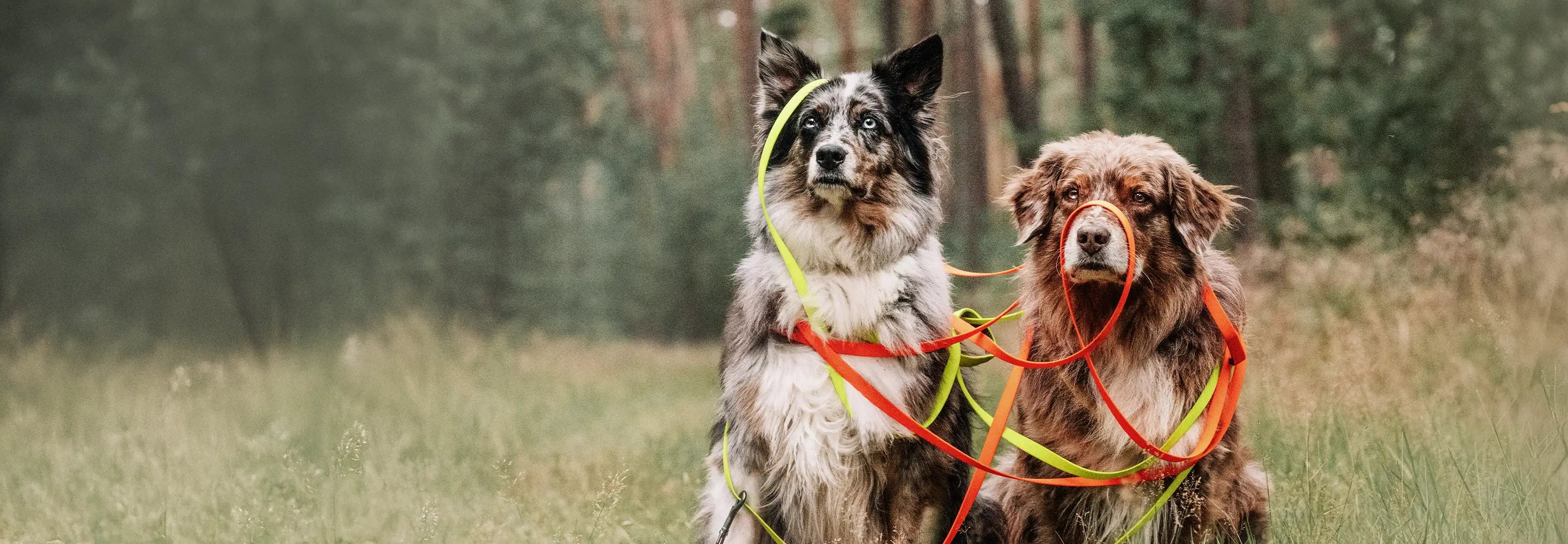
Tow lines: Ideal for giving your puppy more freedom during training. Pay particular attention to the length and secure carabiners.
Tips for keeping puppies on a leash
In the beginning, one thing counts most: consistency and patience. Clear commands and adherence to certain rules are particularly important when training on a leash in order to improve communication between you and your puppy. Pulling, tugging and biting the leash – all of this is completely normal for puppies. Praise your dog when he walks loosely on the leash and be consistent when he pulls. With small training sessions, lots of closeness and play, you build a stable connection.
Also make sure that your dog does not constantly pull on the flexi leash. For the first few months, a fixed leash or towing leash is usually the better choice.
Should you let a puppy off the leash?
Whether you should let your puppy off the leash depends on the environment and his bond with you. In securely fenced areas, you can let your puppy run freely under supervision to train recall. In the woods, on roads, or in places with distractions, a drag leash is often a better choice to give your dog space while ensuring safety.
Safety when walking: This is what you should pay attention to
Your puppy should always be safely leashed, whether in the garden, jogging or going for a walk in everyday life. Regularly check dog leashes, carabiners, clasps and material for damage. Nylon and plastic in particular can show wear and tear over time.
The correct length of the leash is also important: too short limits freedom of movement, too long makes control difficult. You usually get along well with a 2 meter line, but a tow line is ideal for more freedom of movement.
Conclusion: This is how you find the best dog leash for your puppy
Whether nylon, biothane or leather – the selection of dog leashes is large. It is important that you choose an offer that suits your puppy, your walks and your needs. With a little patience, consistency and the right products, walking on a leash will become a wonderful everyday experience for both of you.
Browse through our offer at Rudelkönig now and find the perfect dog leash in different colors for your little adventurer - for relaxed walks, in any weather and in any situation.
Get your new favorite leash now and start your adventure with your puppy stress-free!

